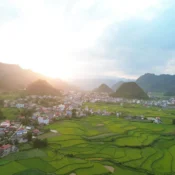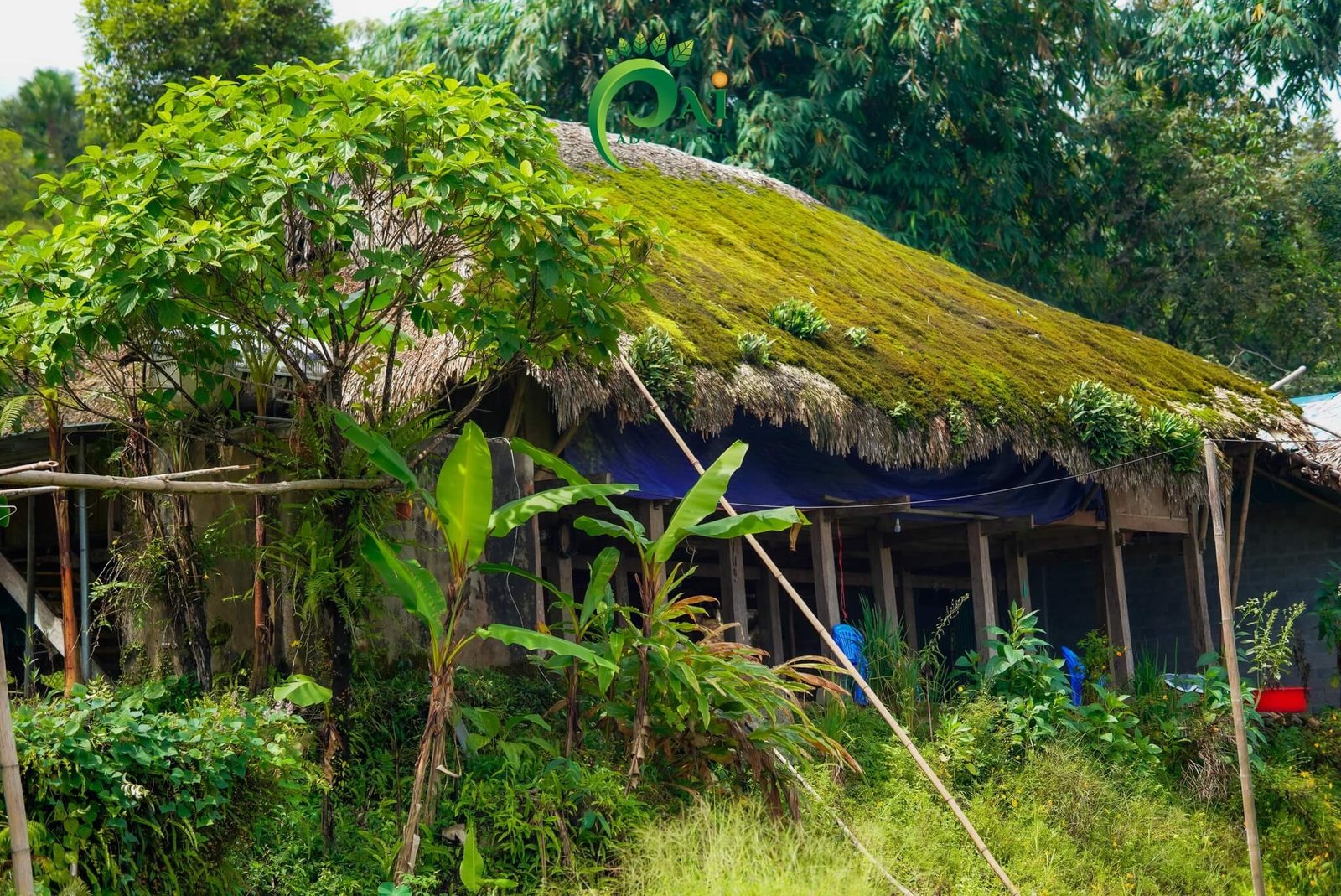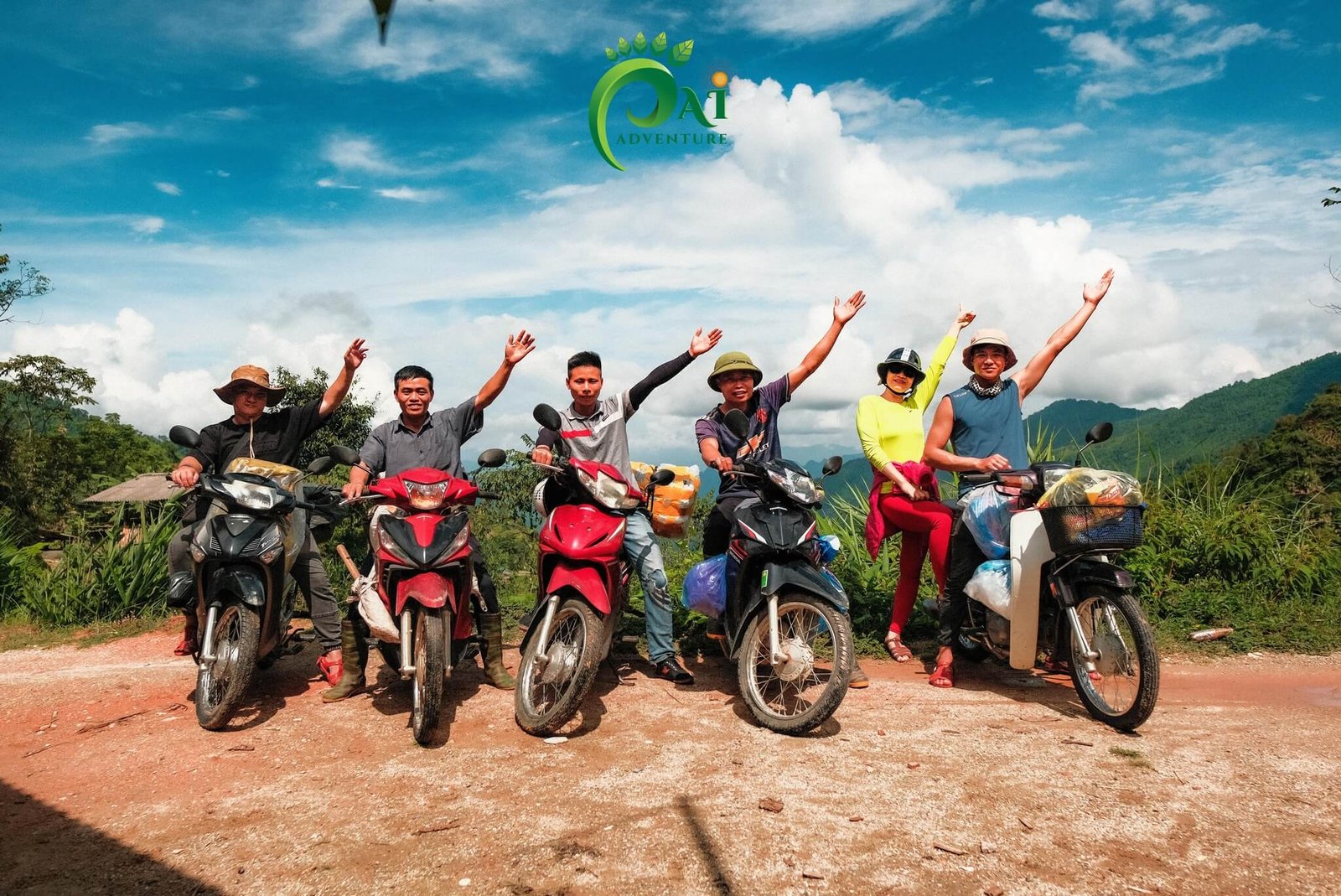

Quick answer: late July is a good time to see Ha Giang’s western rice terraces changing from reflective paddies to fresh green. By August, the green is usually fuller and more continuous across Hoang Su Phi and Xin Man. This is also the rainy season, so the best trip is not the one with the most stops—it is the one with enough flexibility to respond to visibility, road conditions and local weather updates.
There is no single “perfect day” for the Ha Giang green rice season. Elevation, water supply and each village’s planting schedule mean that fields develop at different speeds. One valley may still reflect the sky while a nearby slope is already covered in young rice. That uneven transition is exactly what makes late July and August so interesting.
When is the Ha Giang green rice season in 2026?
Late July: a landscape in transition
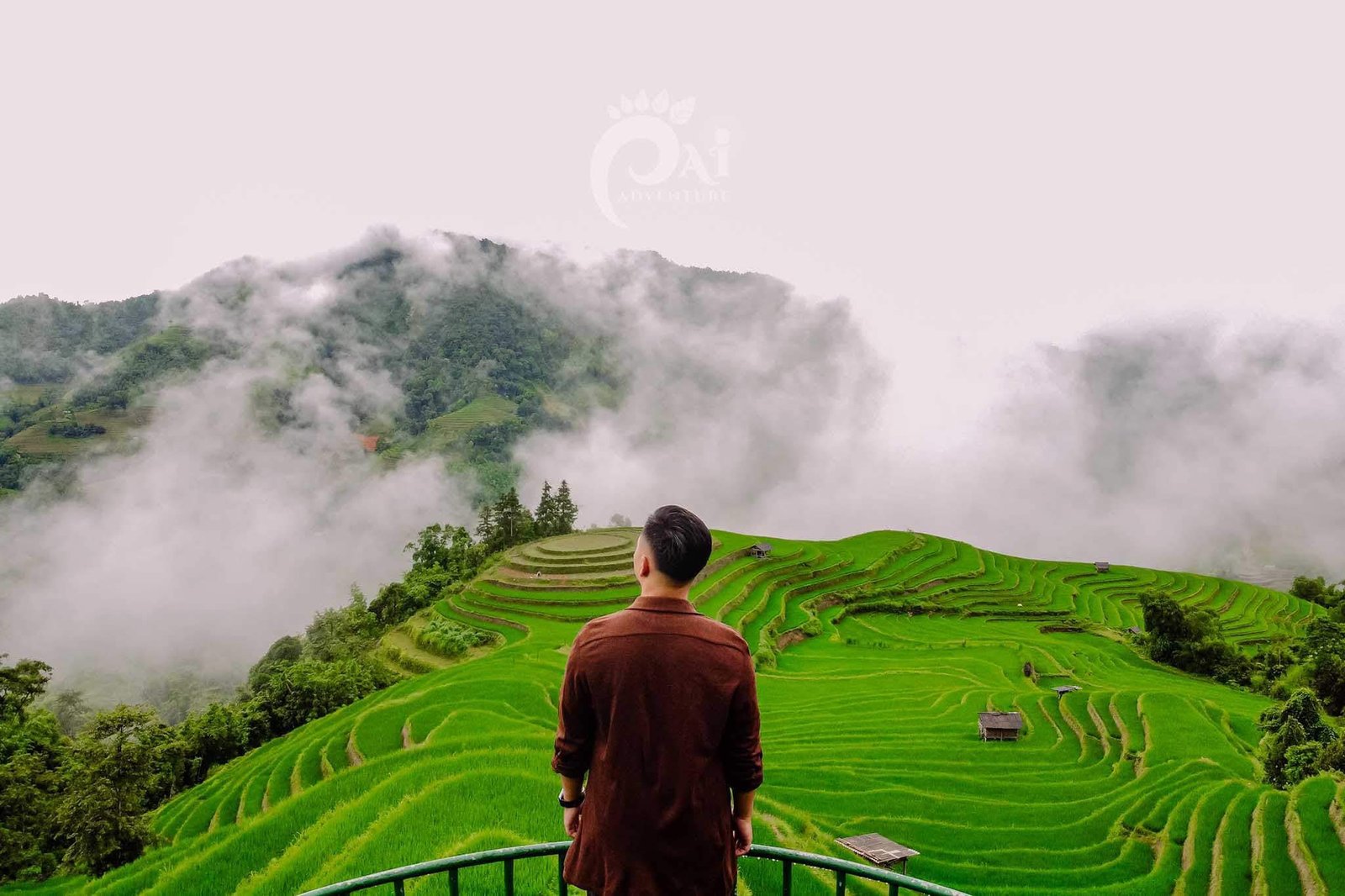
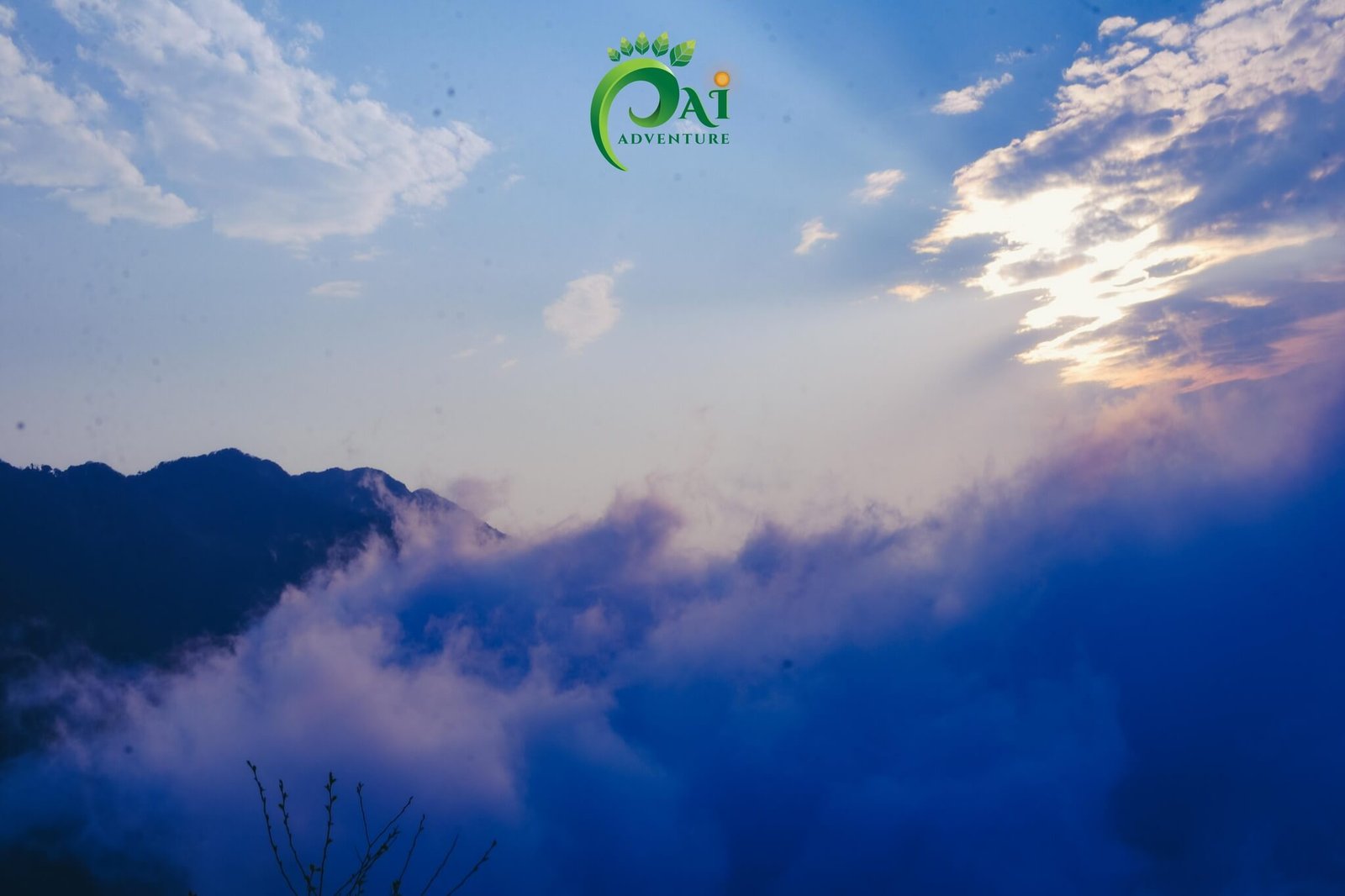
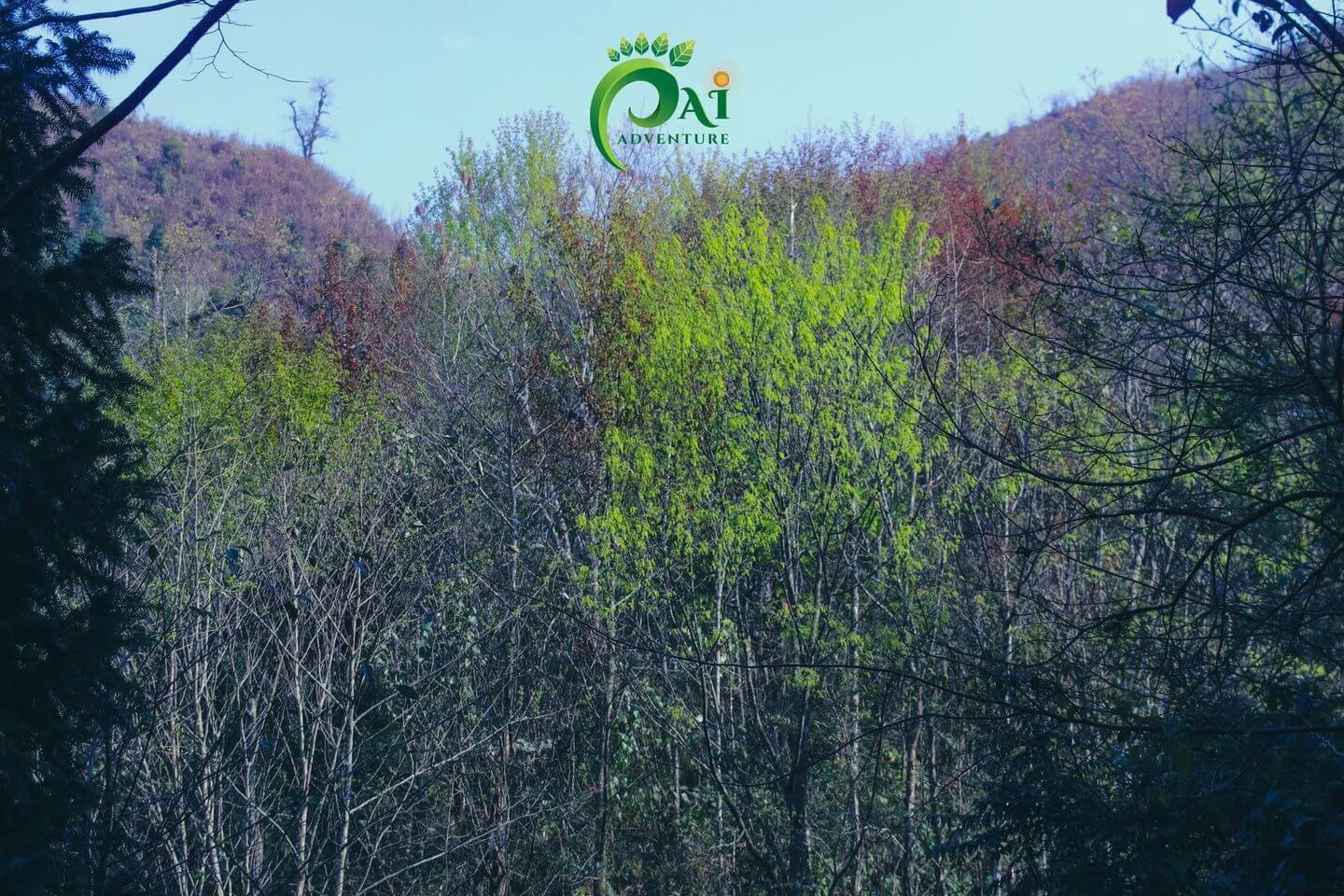
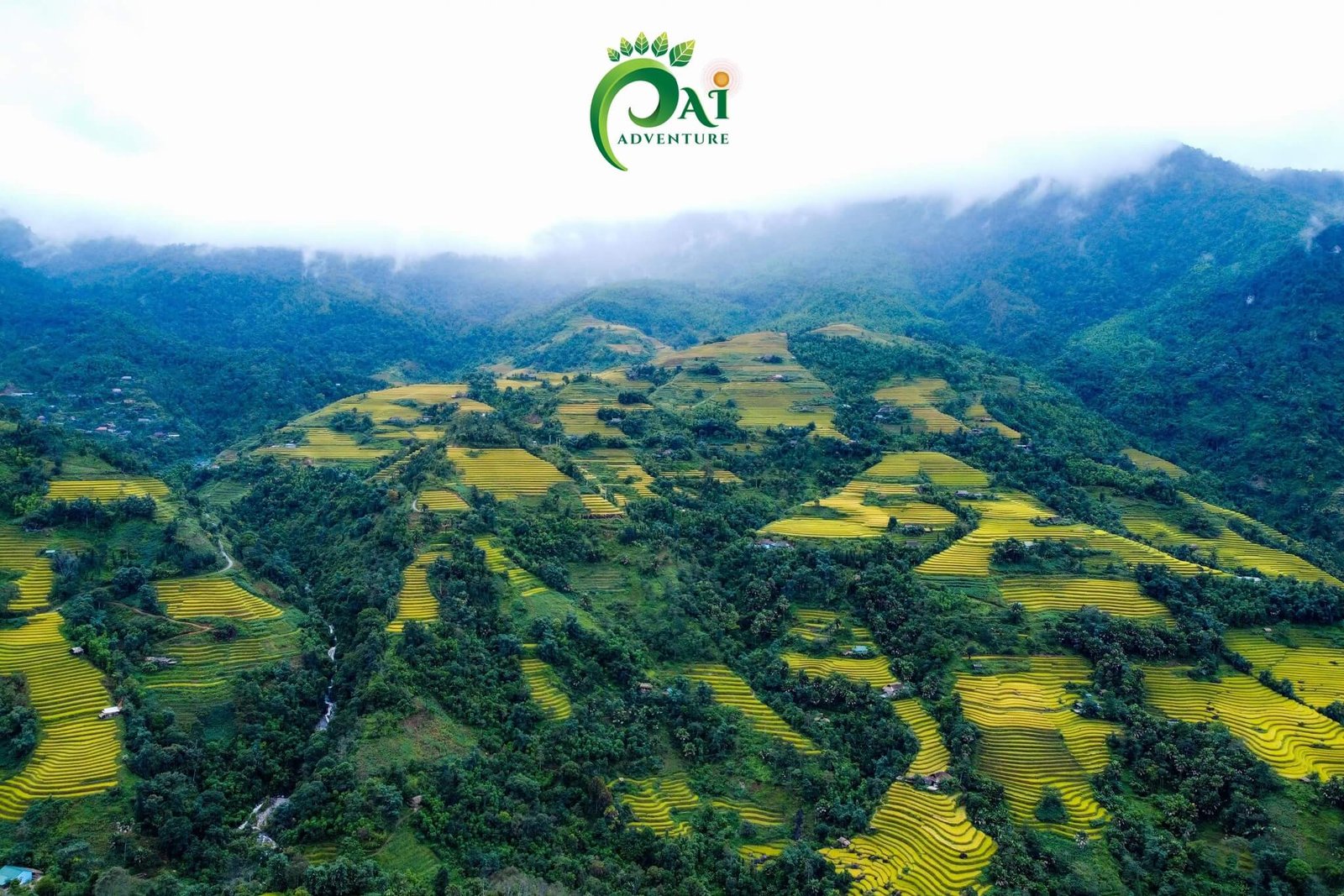
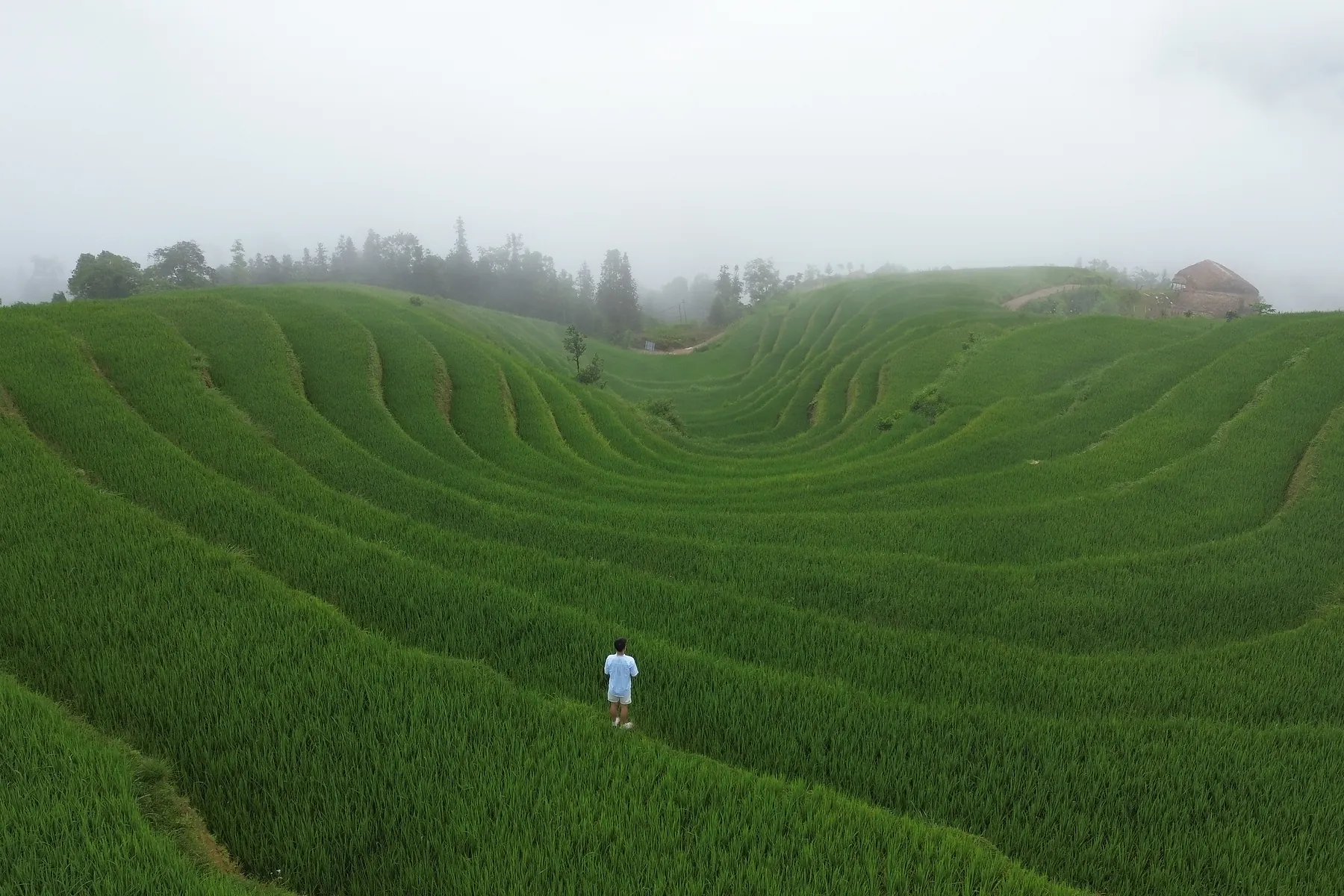
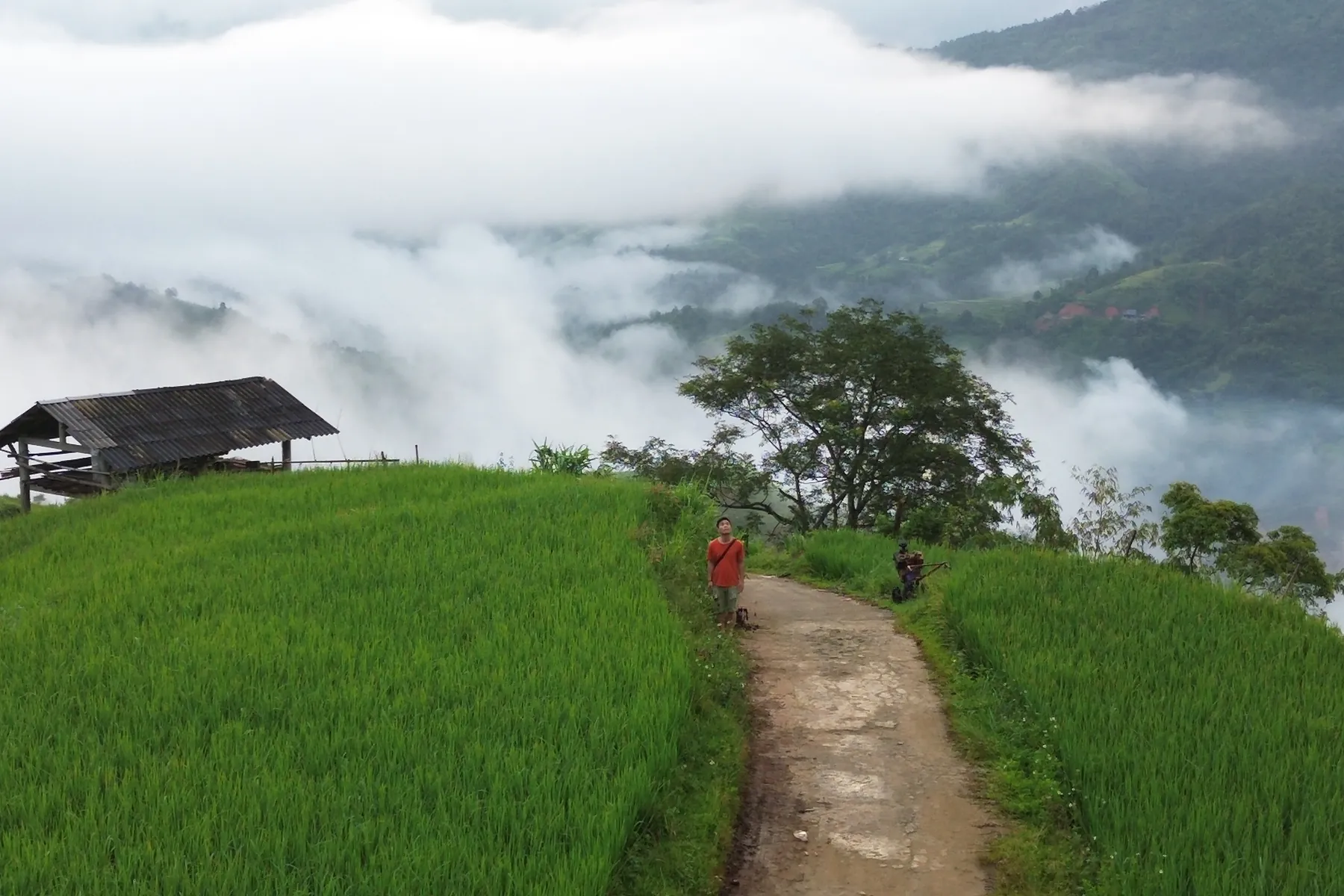
Late July suits travellers who enjoy seeing the farming cycle unfold. Along the same route, you may find mirror-like paddies, newly planted seedlings and deeper green terraces within a short distance. After rain, low clouds often settle into the valleys and reveal the fields in layers.
August: greener and more continuous terraces
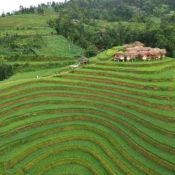
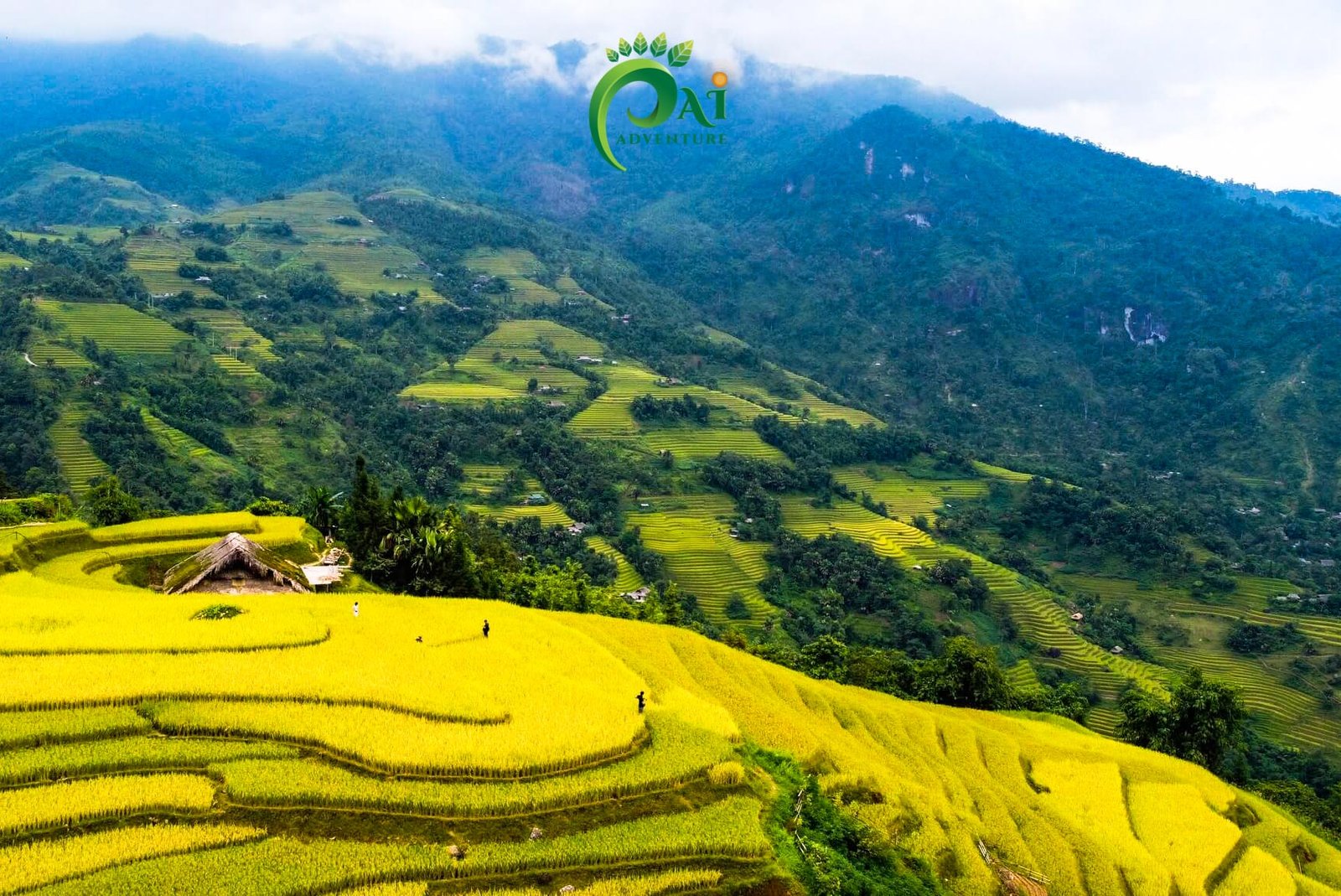
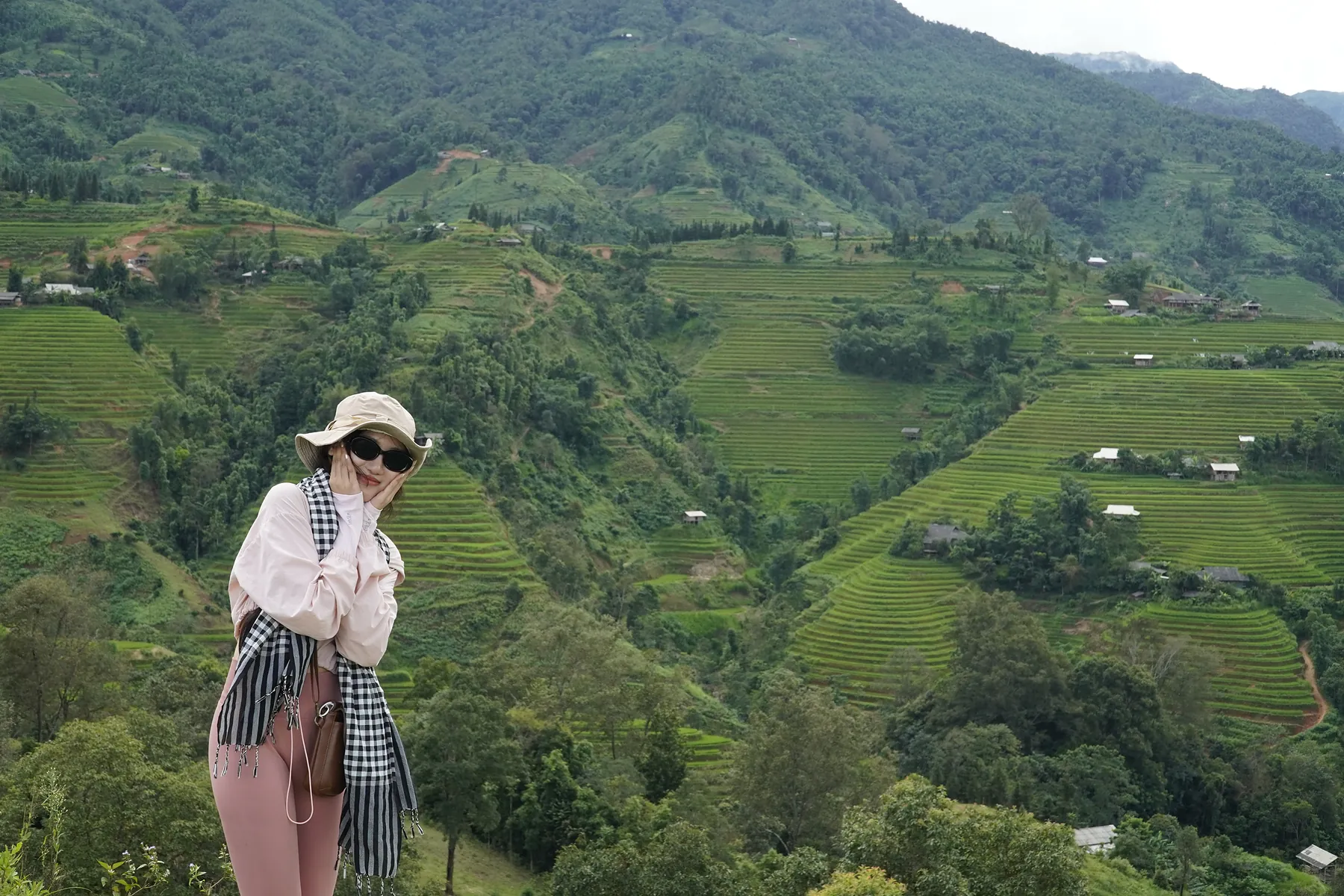
By August, young rice usually covers a wider area in Hoang Su Phi and Xin Man. The curves of the terraces become easier to read as green bands wrap around the mountainsides between stilt houses, forests and village paths. Seasonal timing can still shift with rainfall and planting schedules, so check recent local images close to your travel date rather than relying on the calendar alone.
How does the water-pouring season become green rice season?
During the water-pouring season, water is channelled into the terraces so farmers can prepare the soil and plant rice. The Viet Nam National Authority of Tourism describes June and July in Hoang Su Phi as a time when flooded terraces can resemble giant mirrors, reflecting the surrounding sky and mountains.
Once the seedlings take root, those reflective surfaces gradually turn into bands of green. The change does not happen everywhere at once. A lower valley may already be vividly green while a higher or later-planted area remains in an earlier stage. Think of green rice season as a moving window rather than one fixed date.
Where to see green rice terraces in Hoang Su Phi and Xin Man
Western Ha Giang covers a large mountain area, and the best-known terrace clusters are not close together. For a first trip, choose a clear route and give each area time instead of trying to collect every viewpoint in one day.
- Ban Phung: broad terrace views around a La Chi village, with strong panoramas when visibility is good.
- Ban Luoc, Nam Hong and Nam Khoa: connected terrace landscapes, stilt houses and paths through the valley—well suited to slow observation and photography.
- Suoi Thau Grassland: a more open landscape in Xin Man, where the scenery changes with farming and flower seasons.
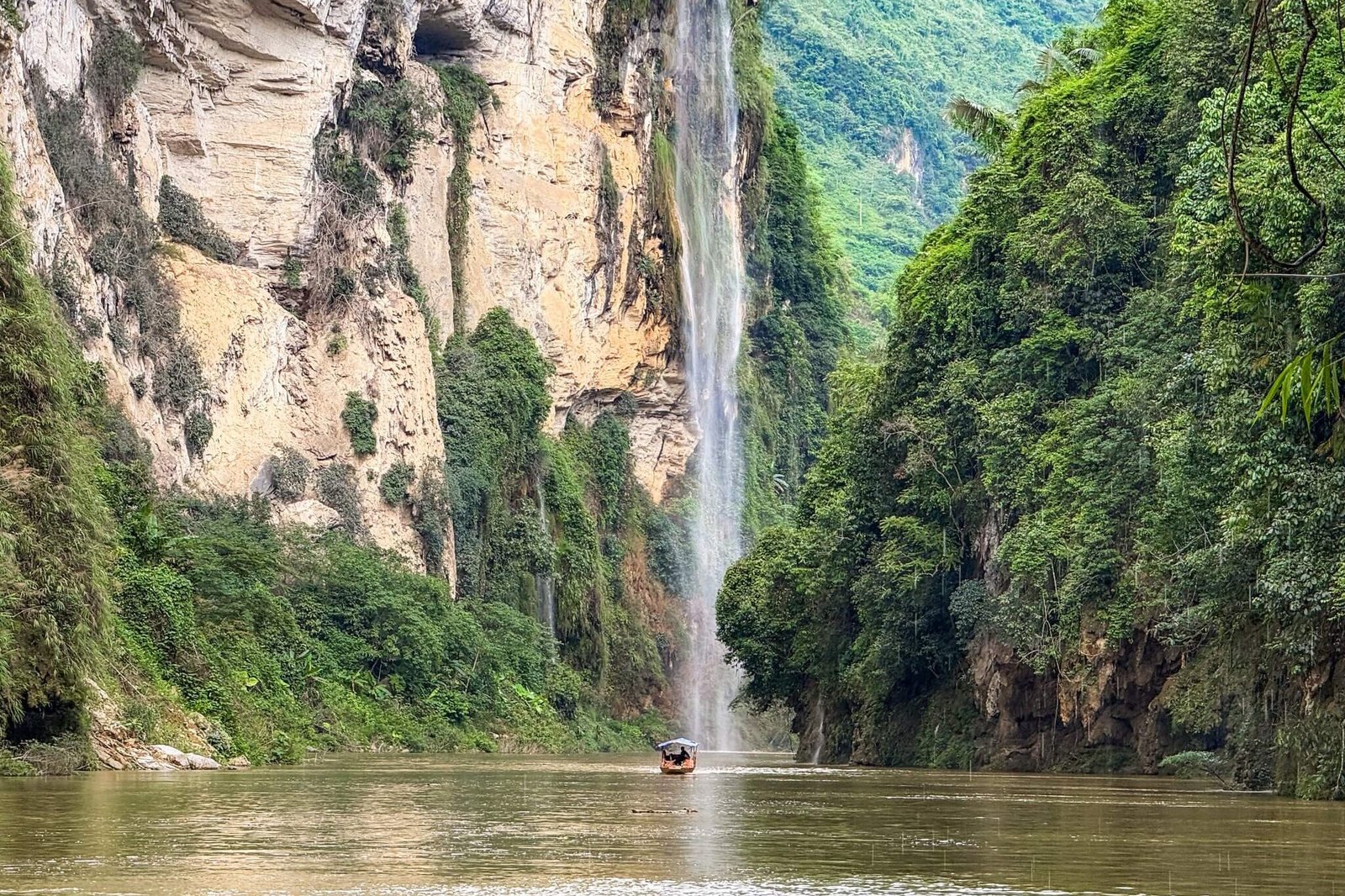
- Tien Waterfall: a powerful rainy-season stop, but only when current road, trail and water conditions make access appropriate.
For a wider overview, read Pai Adventure’s guide to destinations not to miss in western Ha Giang.
Who will enjoy Hoang Su Phi and Xin Man in the green season?
This journey is a strong fit for travellers interested in agricultural landscapes, village life, photography and a slower pace. Compared with the familiar Dong Van Karst Plateau loop, western Ha Giang involves longer distances between stops. In return, it offers a quieter rhythm and more time to notice how people live and farm in the mountains.
If you need every hour to follow a fixed schedule, rainy-season travel may feel frustrating: heavy rain or reduced visibility can change the order of the day. If you are comfortable leaving buffer time and treating safety as more important than completing a checklist, the season can be deeply rewarding.
Rainy-season clouds, streams and waterfalls
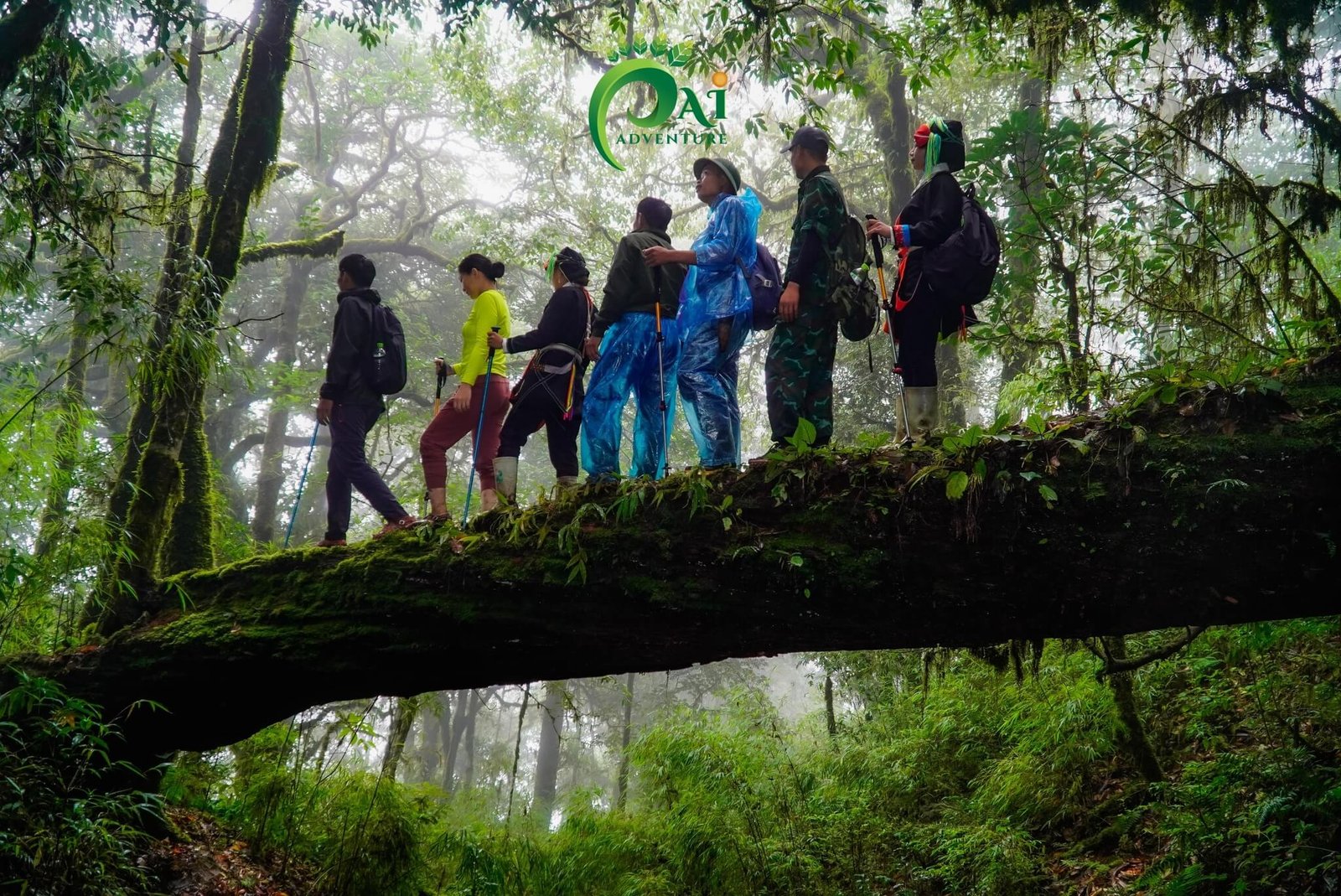
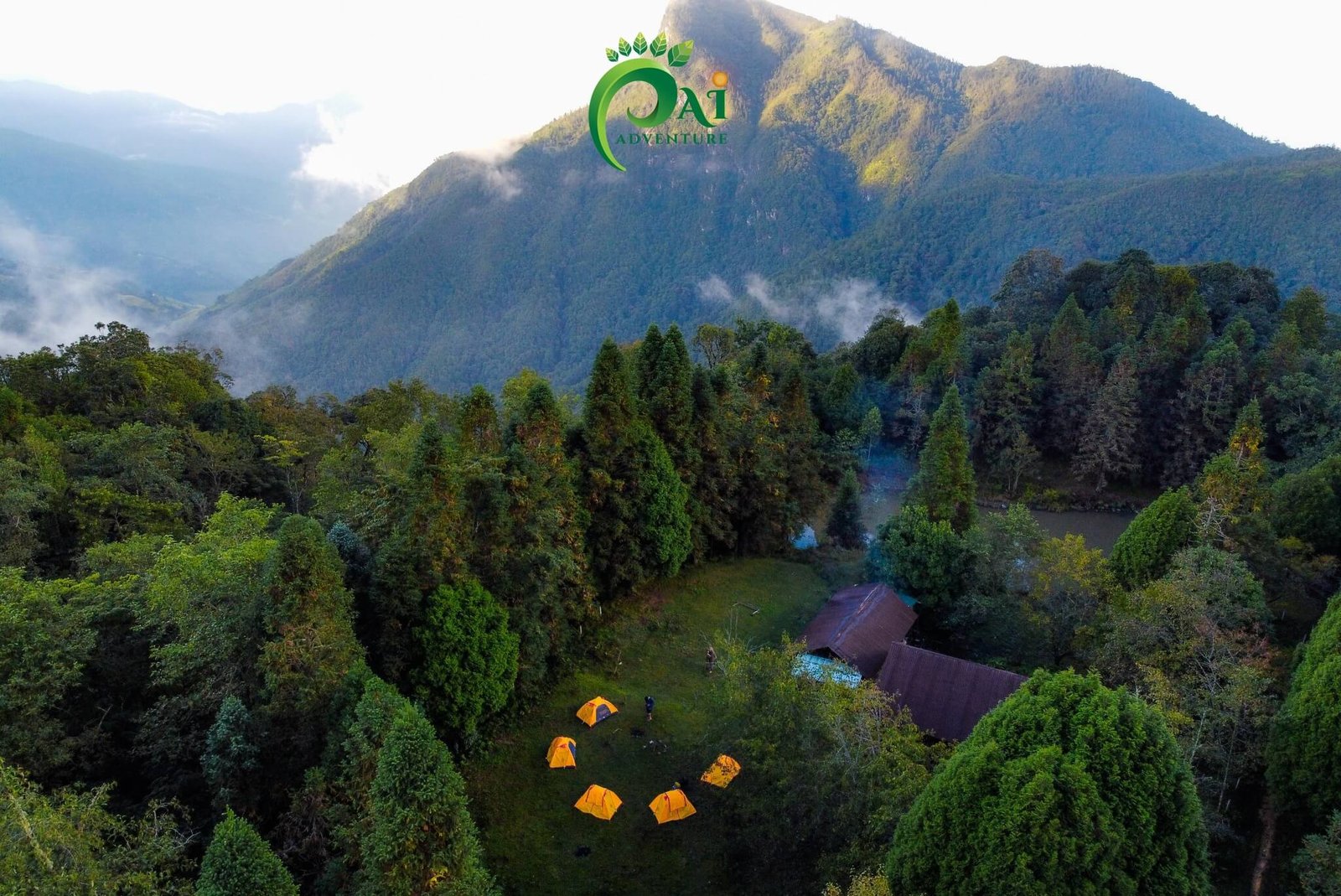
Rain deepens the green of the forests, feeds streams and waterfalls, and can create beautiful layers of low cloud. The same conditions can also make roads slippery, reduce visibility and raise water levels quickly. Rain is not a scenic effect worth chasing at any cost.
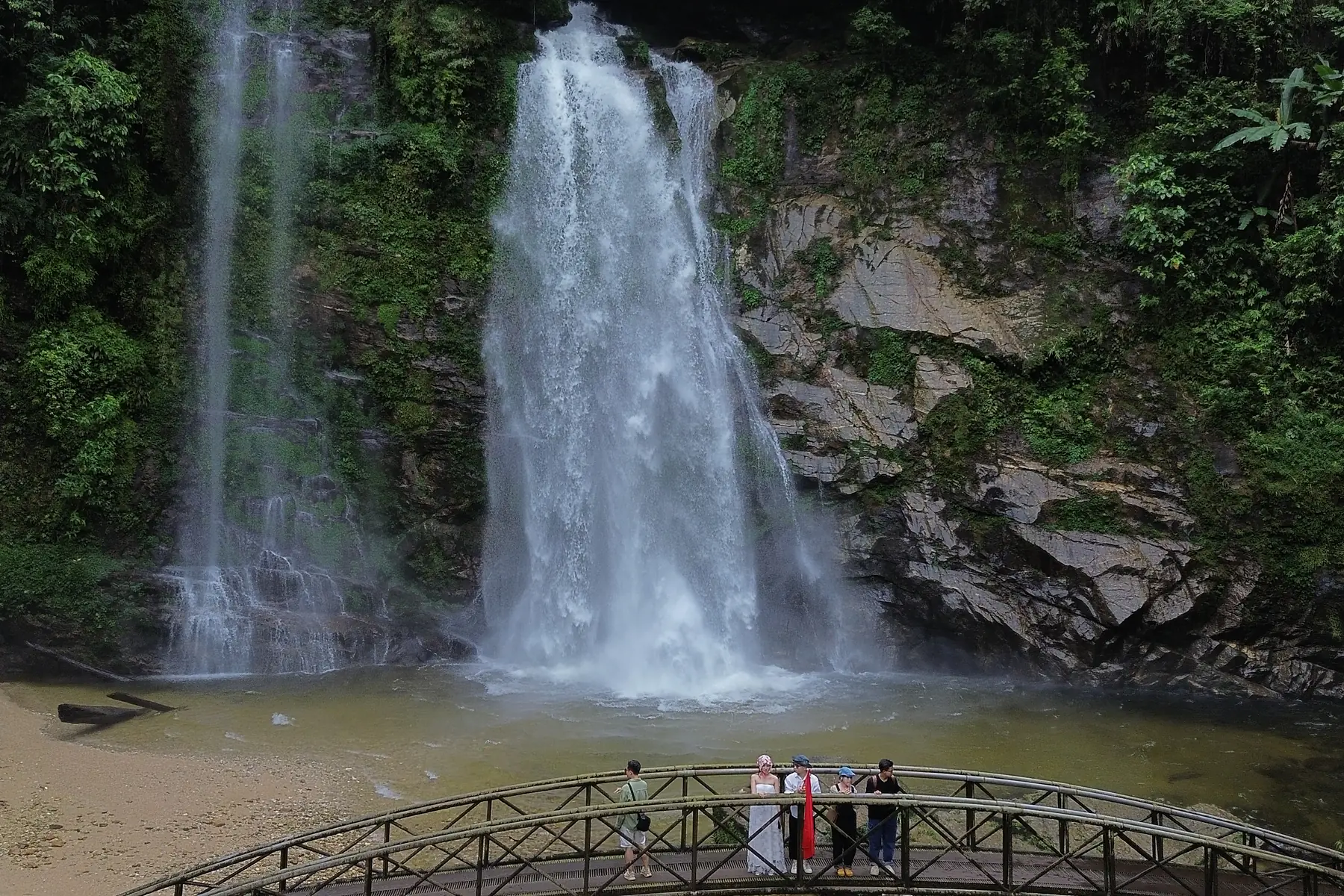
After prolonged heavy rain, be ready to skip waterfalls, small roads or exposed walking sections if local operators consider them unsuitable. A small route change is always better than forcing the original plan in unsafe conditions.
Weather, road conditions and a flexible itinerary
When checked on 22 July 2026, the National Center for Hydrometeorological Forecasting listed showers and thunderstorms for the Ha Giang area from 22 to 25 July, followed by several cloudy days without rain in its ten-day outlook. This is only a snapshot. Recheck the latest forecast before your trip and again before each stage, including any active thunderstorm, flash-flood or landslide warnings.
- Do not schedule tight same-day transport connections; leave room for weather or route changes.
- Travel in daylight and pause when rain, fog or visibility makes riding or driving uncomfortable.
- If you have limited mountain-road experience, consider a car or a local easy rider instead of self-driving.
- Do not enter unmarked side roads, rice-field paths or unstable slopes for a photograph.
- Accept that a stop may need to be removed. No view is worth trading away your safety.
3D2N or 4D3N: which itinerary works better?
These are planning frameworks, not guaranteed departure schedules. Exact stops, transport and access should be confirmed close to the trip.
| Consideration | 3 days, 2 nights | 4 days, 3 nights |
|---|---|---|
| Best for | Travellers with limited time who want to focus on Hoang Su Phi and Xin Man | Travellers who prefer a slower pace and a broader western Ha Giang experience |
| Pace | More compact, so priorities need to be clear | More buffer time and room for distant stops |
| In poor weather | Some stops may need to be removed to keep the day comfortable | The order of experiences is usually easier to adjust |
See the 3D2N Hoang Su Phi, Suoi Thau and Tien Waterfall route if you want to focus on the core western circuit. With more time, the 4D3N Hoang Su Phi, Xin Man and Bac Ha route adds a slower, wider journey. Pai Adventure should confirm the operating plan, transport and stops before booking.
What to pack for Ha Giang’s green rice season
- A compact rain jacket, a quick-drying light layer and a change of clothes.
- Shoes with reliable grip, plus lightweight sandals for your accommodation.
- A dry bag or zip pouches for your phone, documents and electronics.
- Spare socks, a small towel, personal medication and a basic first-aid kit.
- Insect repellent, sunscreen and a brimmed hat.
- A power bank, spare camera batteries and enough storage space.
- Identification documents and some cash for areas with limited electronic payment options.
Pack light, keep rain protection easy to reach and avoid carrying more than you can comfortably manage when getting on and off vehicles or walking on damp ground.
How to visit the rice terraces responsibly
The terraces are working farmland and part of local livelihoods. Help protect both the crop and the community:
- Stay on existing paths; never step into planted fields or stand on narrow terrace edges for a photograph.
- Ask before taking close portraits of residents, children, homes or farming activities.
- Do not fly a drone near homes or in restricted areas without permission.
- Carry your rubbish out, reduce single-use plastic and choose local services where practical.
- Give farmers room to work; their daily life is not a tourism prop.
Frequently asked questions
Is late July or August better for green rice terraces?
Choose late July for a more varied transition, with reflective water and young rice sometimes appearing together. August usually looks greener and more continuous. Neither is universally better; decide which landscape you prefer and check recent local images before travelling.
Does rainy season mean it rains all day?
Not necessarily. Rain may come in short periods, but some days can also be persistently wet. Do not use one day’s weather as a prediction for the whole journey; monitor current forecasts and keep an alternative plan.
Should I self-ride in Hoang Su Phi and Xin Man?
Self-riding is best left to travellers who are comfortable on mountain roads, can control a bike on wet surfaces and know when to stop. A car or local easy rider can reduce the pressure of driving and leave you more time to take in the landscape.
Can families with children or older travellers visit?
Yes, with suitable transport, shorter walks and a lighter schedule. Share mobility, health and rest requirements before the trip so the route can be adjusted rather than assuming one standard itinerary works for everyone.
Plan the green rice season with Pai Adventure
A memorable green-season trip does not need to rush through every viewpoint. It needs the right area, a realistic pace and someone who understands how to adjust the route when conditions change. Tell Pai Adventure your preferred dates, group size and transport style. The local team can check the seasonal landscape, weather and operating conditions before suggesting a suitable itinerary.
Sources